
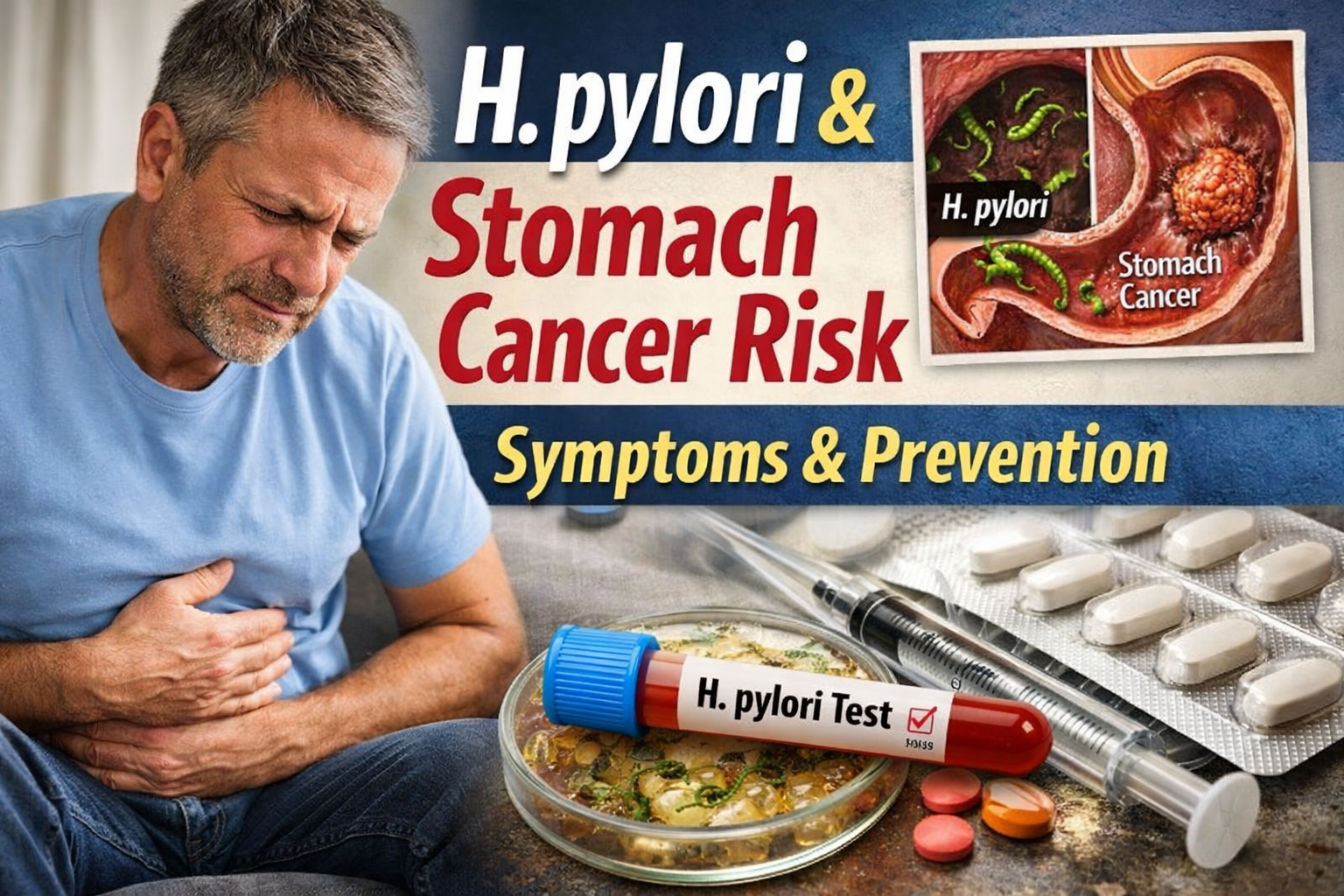
H. pylori and Stomach Cancer Risk: What the Infection Means, What to Watch For, and How to Lower Your Risk
H. pylori and Stomach Cancer Risk: What the Infection Means, What to Watch For, and How to Lower Your Risk
H. pylori is one of those health issues many people have heard of but do not fully understand until stomach pain, indigestion, bloating, or an ulcer workup brings it up. The important question is not simply whether this bacterium exists. It is whether it is actively causing inflammation, ulcer disease, or long-term stomach changes that deserve treatment. H. pylori infection is common worldwide, and many people never notice symptoms. But when the infection persists, it can damage the stomach lining over time and increase the risk of certain stomach cancers.
That does not mean an H. pylori diagnosis is the same thing as a cancer diagnosis. Most people with H. pylori will never develop stomach cancer. Still, the infection matters because it is one of the clearest known risk factors for non-cardia stomach cancer, and treatment can lower that risk.
What H. pylori actually is
H. pylori, short for Helicobacter pylori, is a bacterium that lives in the stomach and can persist for years if it is not treated. It is also a major cause of chronic gastritis and peptic ulcer disease. In many people, the infection causes no obvious symptoms at all, which is one reason it can go unnoticed for a long time.
Researchers are still studying exactly how people acquire H. pylori, but major medical sources note that it may spread through contact with infected vomit, stool, or saliva, as well as through contaminated food or water. Infection often happens during childhood.
How H. pylori can raise stomach cancer risk
The connection between H. pylori and stomach cancer is not about one sudden event. It is about chronic inflammation. Long-term infection can keep irritating the stomach lining, which may lead to ongoing injury and repair. Over time, that repeated cycle can contribute to atrophic gastritis and more advanced changes in the stomach lining that may increase cancer risk.
This is why H. pylori is taken seriously even when symptoms seem mild. The infection is recognized as a major risk factor for stomach cancer, and studies cited by the National Cancer Institute show that eradicating H. pylori can reduce gastric cancer risk in several groups, including some people with no symptoms and some with a family history of gastric cancer.
Can you have H. pylori and feel completely normal?
Yes. In fact, that is common. Many people with H. pylori do not have symptoms. Others develop symptoms that feel more like everyday stomach irritation than something dramatic, which is one reason the infection can be easy to dismiss.
When symptoms do occur, they may include upper abdominal discomfort, stomach pain, bloating, nausea, gas, belching, or ulcer-type symptoms. H. pylori is also a common cause of peptic ulcers, which can cause burning or aching stomach pain, fullness, and sometimes bleeding.
When symptoms may be more concerning
One of the hardest parts about stomach cancer is that it often does not cause clear symptoms early on. According to the National Cancer Institute, early stomach cancer usually does not have symptoms, and symptoms often begin after the disease has spread. When symptoms do appear, they can overlap with much more common problems like indigestion or stomach upset.
Symptoms that deserve medical attention include persistent indigestion or stomach discomfort, bloating after eating, mild nausea, loss of appetite, feeling full after eating small amounts, vomiting, stomach pain, black or bloody stool, and unexplained weight loss. Trouble swallowing, jaundice, or swelling from fluid in the abdomen are more advanced warning signs that should not be ignored.
A key practical point is this: the presence of these symptoms does not automatically mean cancer, but symptoms that persist, worsen, or come with bleeding, weight loss, or trouble eating should be evaluated rather than brushed off.
How doctors test for H. pylori
Doctors can check for H. pylori in several ways. Common options include a urea breath test, a stool test, and in some situations an upper endoscopy with biopsy. Which test is used depends on the clinical situation, the person’s symptoms, and whether the doctor also needs to look directly at the stomach lining.
An upper endoscopy may be especially useful when there are alarm features such as bleeding, suspected ulcer complications, unexplained weight loss, or concern for more serious disease. It allows the clinician to examine the upper digestive tract and take tissue samples if needed.
If H. pylori is found, what treatment usually looks like
H. pylori is usually treated with a combination of medicines, not a single drug. Standard treatment commonly includes two or more antibiotics plus acid-suppressing therapy such as a proton pump inhibitor, and sometimes bismuth, depending on the regimen chosen.
Just as important, treatment should not end with taking the pills alone. Follow-up testing is generally recommended to make sure the infection was actually eradicated. Mayo Clinic notes that testing is commonly repeated at least four weeks after treatment.
That follow-up matters because persistent infection means the stomach may still be exposed to the same inflammation that made treatment necessary in the first place.
Other factors that can raise stomach cancer risk
H. pylori is a major risk factor, but it is not the only one. The National Cancer Institute lists additional stomach cancer risk factors including tobacco use, certain diet patterns, some medical conditions, and genetics or family history. Diets low in fruits and vegetables and high in salted, smoked, or poorly preserved foods are associated with higher risk.
Smoking also matters. NCI states that people who smoke have a higher risk of stomach cancer than nonsmokers, and smoking may also make H. pylori treatment less effective.
Alcohol is a known human carcinogen overall, and NCI notes that some evidence suggests alcohol use may also be associated with increased stomach cancer risk.
Family history should not be overlooked either. Some people with a personal or family history of stomach cancer or hereditary gastric cancer syndromes may need more individualized risk assessment, and certain higher-risk groups may benefit from discussion about upper endoscopy screening.
Practical ways to reduce your risk
The most useful next step is not panic. It is action. If you have ongoing upper stomach symptoms, a history of ulcers, or a known H. pylori infection, getting evaluated and treated appropriately can reduce long-term risk.
Risk reduction also means addressing the factors you can change: stop smoking, limit alcohol, and aim for a diet centered more on fruits, vegetables, and less heavily salted, smoked, or poorly preserved foods. These steps do not guarantee prevention, but they align with the risk patterns identified by major cancer authorities.
If you have a strong family history of stomach cancer, unexplained anemia, black stool, vomiting blood, unintentional weight loss, or persistent symptoms that do not settle, it is reasonable to ask not only about H. pylori testing but also whether endoscopy is appropriate.
The bottom line
H. pylori is common, often silent, and usually treatable. Most people who have it will not develop stomach cancer. But the infection still deserves attention because chronic H. pylori can injure the stomach lining over time, and treating it can reduce cancer risk.
The smartest response is not fear. It is to take persistent symptoms seriously, get tested when appropriate, complete treatment exactly as prescribed, and confirm that the infection is gone afterward.
FAQ
Does having H. pylori mean I will get stomach cancer?
No. Most people with H. pylori do not develop stomach cancer. The infection increases risk, but it does not make cancer inevitable.
Can H. pylori cause symptoms without causing cancer?
Yes. H. pylori can cause gastritis, dyspepsia-like symptoms, and peptic ulcers without cancer being present. It can also cause no symptoms at all.
What tests are commonly used to check for H. pylori?
Common tests include the urea breath test, stool testing, and sometimes biopsy during upper endoscopy.
Should you be retested after treatment?
Yes. Follow-up testing is commonly recommended, and Mayo Clinic notes that it is generally done at least four weeks after treatment to confirm the infection is gone.